The Season-Transition Layering Mistake That Makes You Sweat, Not Warm

Quick Answer: The mistake is layering by thickness instead of by function — piling on sweaters instead of using a base layer, a breathable mid layer, and one removable outer piece. Three functional layers beat four random ones.
You put on a sweater, then a cardigan over it, then a jacket because it’s 55 outside, and by the time you’re inside a warm store you’re peeling off in a doorway. That’s not the weather’s fault — it’s the layering order.
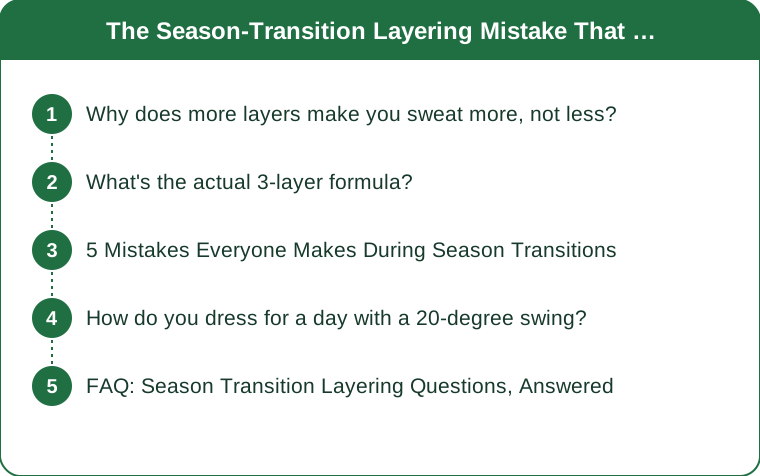
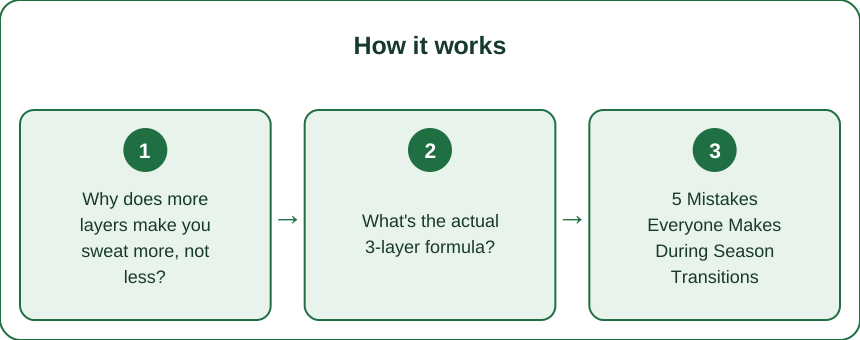
Why does more layers make you sweat more, not less?
Piling on similar-weight pieces (sweater plus cardigan plus jacket) traps heat with no way to release it gradually. Each layer should do a different job: wick moisture, add insulation, or block wind — not just add fabric.
When every layer is doing the same job, you either overheat indoors or stay cold outside, because you can’t remove just one and still be dressed right.
What’s the actual 3-layer formula?
Base layer: a thin, moisture-wicking or breathable tee that sits against skin. Mid layer: one insulating piece — a light knit or fleece — that traps warmth without bulk. Outer layer: a jacket you can remove entirely and still look finished underneath.
This lets you drop one piece per 10-15 degree shift instead of overheating or under-dressing.

5 Mistakes Everyone Makes During Season Transitions
- Wearing summer fabrics under a warm coat — cotton tees trap sweat once you’re moving.
- Skipping the mid layer entirely and going straight from tee to heavy coat, leaving nothing for the 60-degree days.
- Choosing all-wool everything, which overheats indoors fast.
- Not accounting for wind — a mid layer with no wind resistance fails outdoors even if it’s warm.
- Layering thickness instead of function, the core mistake above.
How do you dress for a day with a 20-degree swing?
Start with your base and mid layer as the outfit you’d wear at the warmest point of the day, then add a removable outer layer sized for the coldest point. This means the outer layer is doing all the temperature work, not your base pieces.
Check the hourly forecast, not just the daily high and low — a 20-degree swing across 6 hours needs a genuinely removable piece, not just a lighter jacket.
FAQ: Season Transition Layering Questions, Answered
How many layers is too many?
More than three functional layers usually means you’re duplicating a job — two insulating pieces, for example — rather than adding a new function.
What fabric works best as a base layer?
A breathable cotton-blend or moisture-wicking synthetic against skin performs better than heavier natural fibers, which hold moisture instead of moving it away.
Should I layer differently for indoor days vs outdoor days?
Yes — indoor-heavy days need a lighter, easily removable outer layer since you’ll spend more time in heated spaces than exposed to outdoor temperatures.
TL;DR:
- Layering by function (base, mid, outer) beats stacking similar-weight pieces
- The outer layer should absorb temperature swings, not your base pieces
- Wind resistance matters as much as warmth for an outdoor mid layer
- Check the hourly forecast for real swings, not just the daily range
Next transitional day, count your layers by job, not by number — you’ll stop sweating indoors and stay warm outside.
Keep Reading
This article is for general informational and styling purposes only. Fit, sizing, and product availability may vary.