The Layering Mistake That Only Shows Up Once You're Indoors, Not Outside

Quick Answer: The most common indoor-specific layering mistake is choosing a base layer that’s comfortable outdoors in cool air but too warm once indoor heating kicks in — the fix is building layers around a genuinely removable, easy-to-shed piece rather than one thick combined layer, so indoor overheating has an actual quick fix instead of just discomfort.

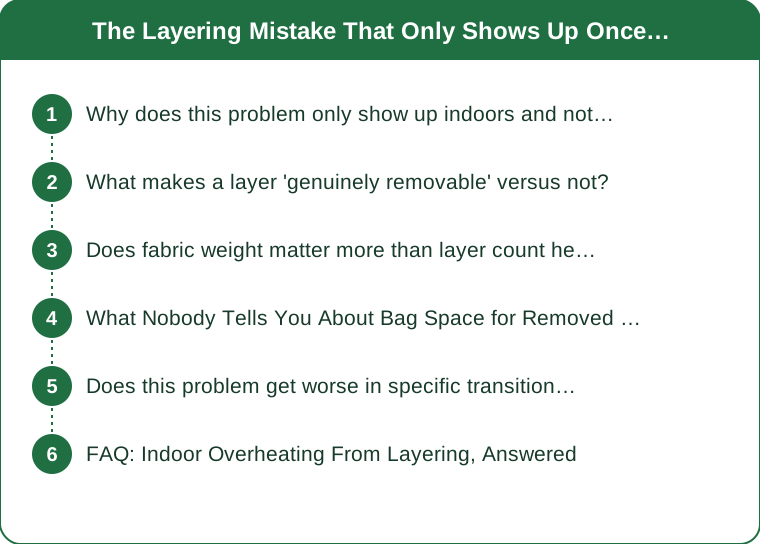
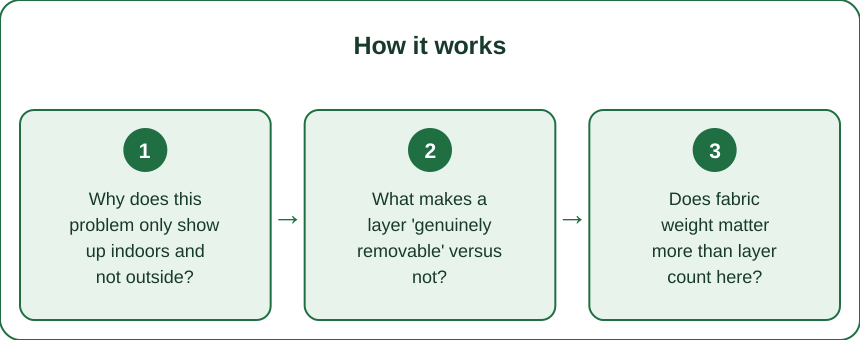
Why does this problem only show up indoors and not outside?
Outdoor cool air constantly carries heat away from your body, masking how warm a layering combination actually is — step into a heated indoor space with no airflow, and the same combination that felt fine outside can suddenly feel significantly too warm, revealing the mismatch.
What makes a layer ‘genuinely removable’ versus not?
A genuinely removable layer is one that works as a complete, presentable outfit on its own once removed — a cardigan over a top that looks finished without it, versus a single thick sweater that leaves you in an undershirt if removed. Building around a removable outer layer solves the indoor-overheating problem directly.
Does fabric weight matter more than layer count here?
Often yes — three thin layers generally regulate temperature better across indoor-outdoor transitions than two thick ones, since thin layers can be removed incrementally to fine-tune warmth, while thick layers create bigger temperature jumps with each removal.

What Nobody Tells You About Bag Space for Removed Layers
Planning for where a removed layer actually goes (a bag with room, or a jacket that ties around the waist without looking messy) is part of solving this problem, not an afterthought — a lot of people avoid removing a layer indoors specifically because they have nowhere convenient to put it.
Does this problem get worse in specific transitional months?
Yes — early fall and early spring create the widest daily indoor-outdoor temperature gaps, since outdoor temperatures are cool but many indoor spaces are already running heating or air conditioning at full capacity, creating a bigger mismatch than deep winter or summer.
FAQ: Indoor Overheating From Layering, Answered
Should the innermost layer always be the thinnest?
Generally yes — a thin, breathable base layer gives the most flexibility, since it’s comfortable whether worn alone indoors or combined with more layers outside.
Does fabric type (wool versus cotton) affect this indoor overheating issue?
Yes — wool regulates temperature and moisture more effectively across a range than cotton, which tends to feel clammy once you start overheating indoors.
Is a scarf a good ‘easy remove’ layer for this problem?
Yes, scarves are one of the easiest layers to remove and store without disrupting the rest of an outfit, making them a practical partial solution.
TL;DR:
- Outdoor airflow masks how warm a layering combo actually is until you’re indoors
- A genuinely removable outer layer, not one thick combined layer, solves the mismatch
- Three thin layers regulate temperature better than two thick ones
- Early fall and early spring create the widest daily indoor-outdoor temperature gaps
The fix isn’t wearing less — it’s structuring layers so removing one indoors is actually easy and still looks finished.
Keep Reading
This article is for general informational and styling purposes only. Fit, sizing, and product availability may vary.