Why Shoes Are the Hardest Part of Dressing for the In-Between Weeks

Quick Answer: Every other garment in a transitional outfit can be added or removed during the day. Shoes are a single decision made in the morning that you live with for twelve hours across a 20-degree swing. That makes footwear the highest-stakes and least flexible choice of the season, and it is why the right answer is a shoe with an adjustable enclosure and a sock you can change.
Late August into September is the most-complained-about dressing window of the year, and the standard advice is all about layering. Layering is genuinely the answer for your torso.
Your feet do not layer. You get one shoe, one sock, and no adjustments until you get home.
That asymmetry is why people who have their transitional wardrobe otherwise figured out still get it wrong from the ankle down.
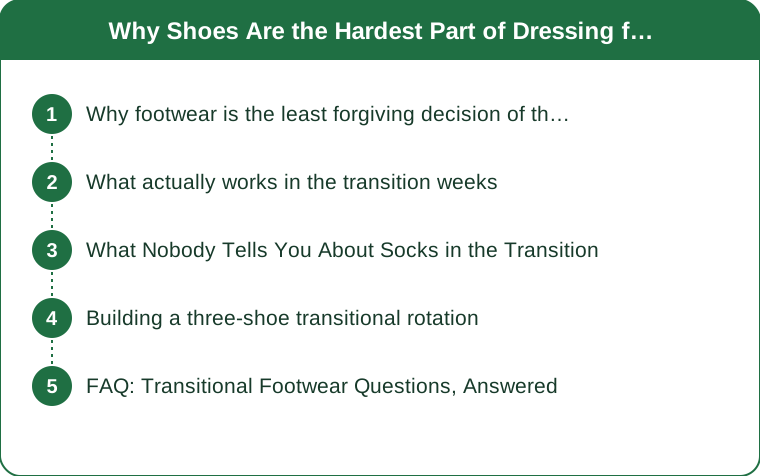
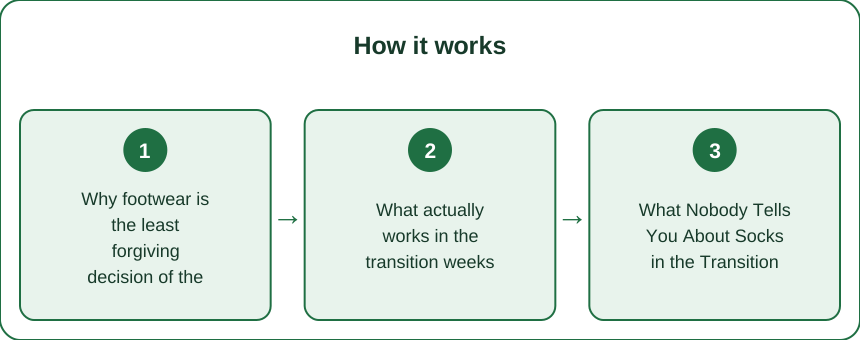
Why footwear is the least forgiving decision of the season
Three reasons, and they compound in exactly the wrong direction.
No mid-day adjustment. You can take off a cardigan at 2pm. You cannot take off half a boot. Whatever you chose at 7am is what you have at 7pm, through a morning that started at 58°F and an afternoon that hit 82°F.
Feet swell. Over a full day, and especially in heat, feet expand measurably. A closed shoe that fit perfectly in a cool morning can be genuinely tight by late afternoon. This is why a shoe that felt fine all summer in the evening feels wrong when worn from early morning.
Sweat has nowhere to go. A closed shoe with no sock — the summer habit many people carry into fall — traps moisture, and in a shoe that is now being worn for a longer, warmer day, that means blisters and odor. Damp feet also feel cold much faster in a cool evening, so the shoe that was too warm at noon leaves you cold at seven.
The result is a specific and familiar late-summer misery: hot at midday, damp all afternoon, cold at night, all from the same pair of shoes.
What actually works in the transition weeks
The answer is a category, not a specific shoe: closed enough to look seasonal, open enough to breathe, with an adjustable enclosure.
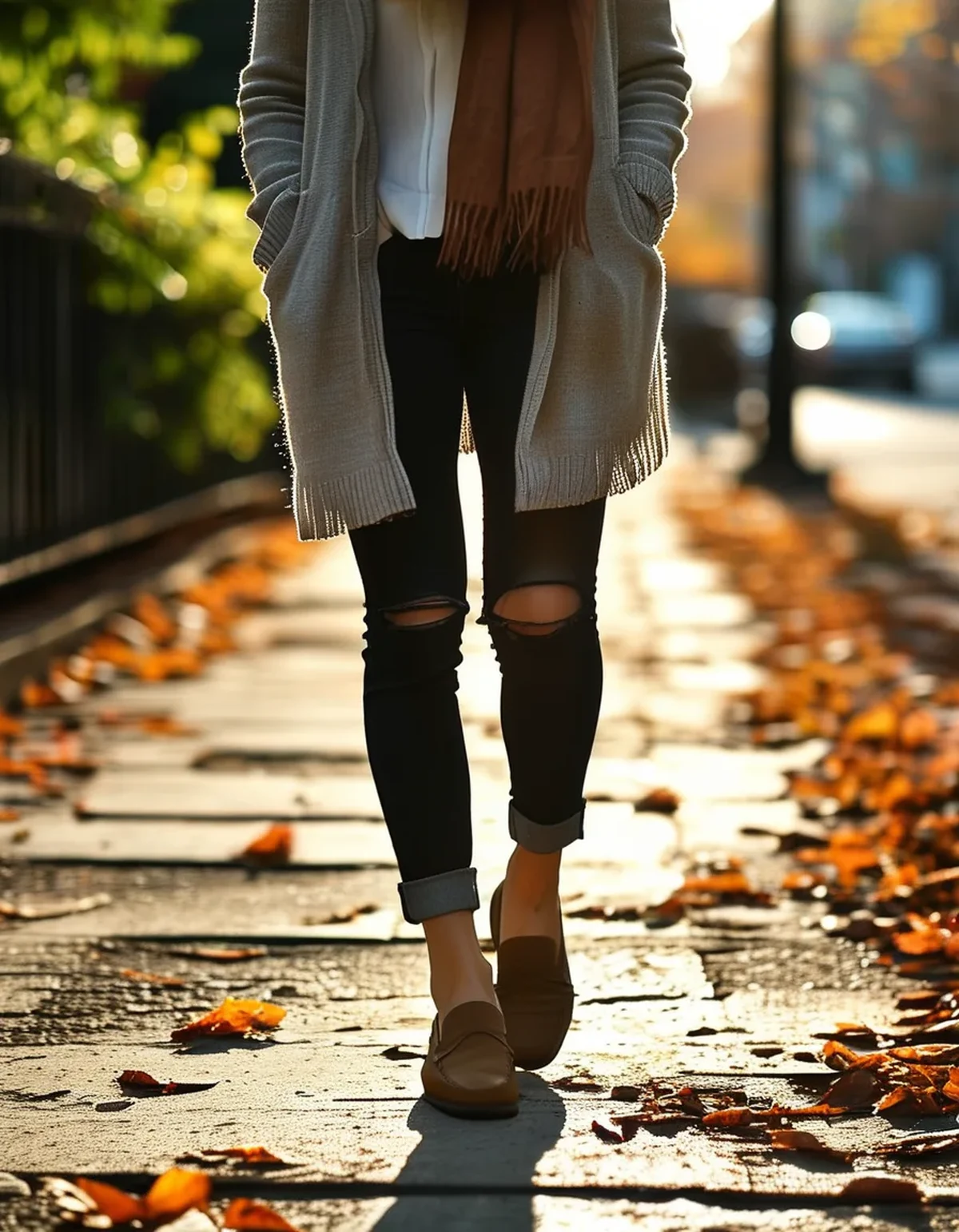
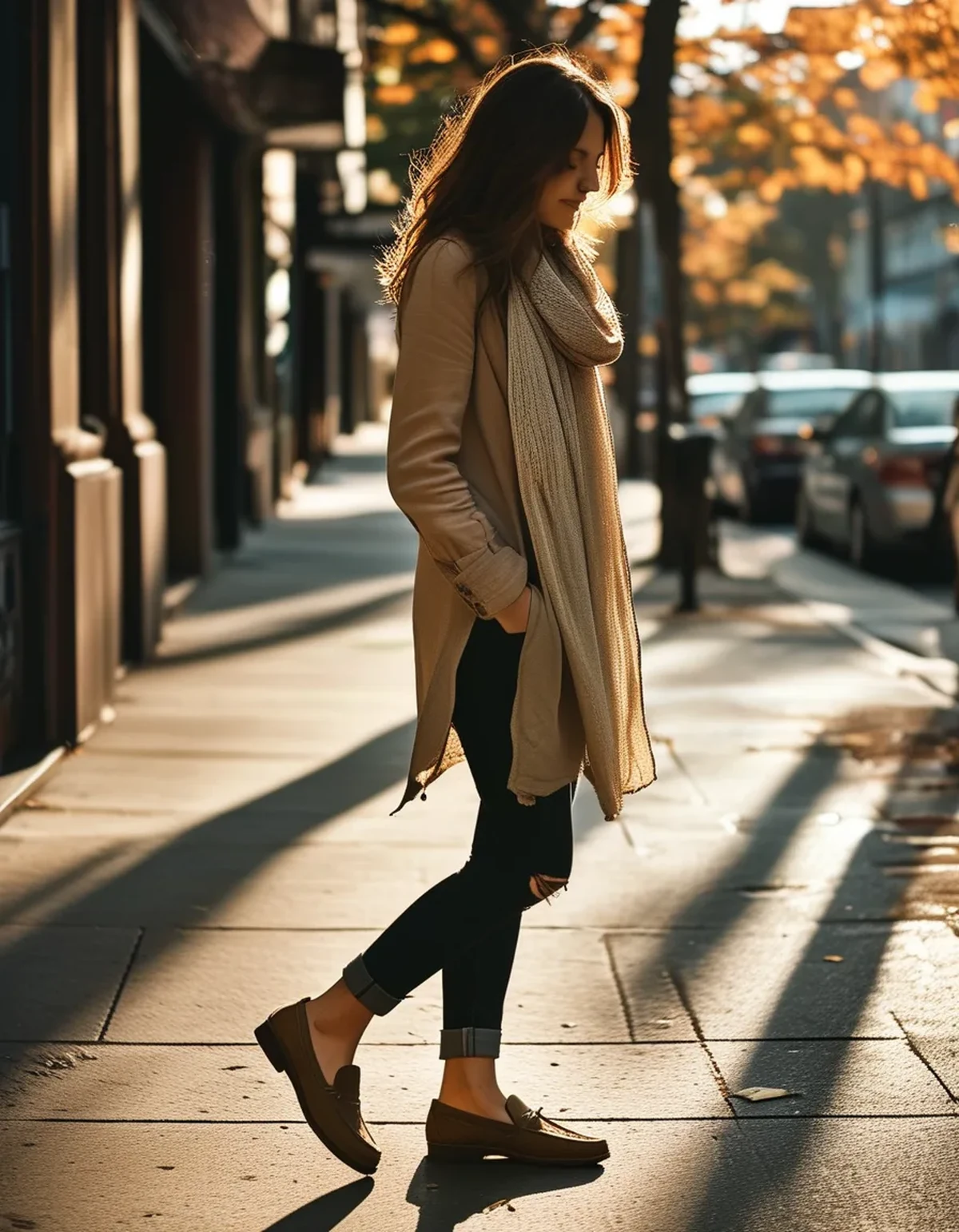
Loafers and mules. The workhorse of the transition. Closed toe reads as fall, open back or low vamp lets heat out, and there is no lacing to fight. The best transitional shoe for most people, and it works bare or with a low-profile sock.
Sneakers in canvas or knit rather than leather. Breathable, adjustable via laces, and they carry across the whole swing. A leather sneaker is warmer than people assume and is better saved for a few weeks later.
Ankle boots — but only the unlined ones. A leather ankle boot without insulation works well once mornings are consistently under about 60°F. A shearling-lined one is a mid-October shoe being worn in early September, which is the most common transitional footwear mistake.
Ballet flats and low block heels with a thin sock. Easy, breathable, and they handle the swing better than any closed lace-up.
What to retire early: slides and pool sandals, which stop reading as intentional once anyone else is in closed shoes, and anything shearling or heavily lined, which is at least a month premature.
What Nobody Tells You About Socks in the Transition
Socks are the layering system your feet do have, and almost nobody uses them deliberately.
Carry a spare pair. This is the single most useful transitional habit and nobody does it. A fresh pair at midday resets damp feet completely and takes thirty seconds. It solves the cold-evening problem before it starts, because dry feet stay warm.
Choose merino over cotton. Cotton holds moisture against the skin and stays damp all day. A thin merino sock manages a 20-degree swing far better and does not smell after a long day — which is precisely why hikers wear it and office workers, oddly, do not.
No-show socks are not a compromise. A good low-profile sock in a loafer gives you the bare-ankle look with actual moisture management. The reason people abandon them is fit — a no-show that slips down is worse than nothing, so buy ones with a heel grip and size them properly.
Ankle exposure is a real temperature lever. Bare ankles genuinely feel cooler, which is useful at midday and unpleasant at 8pm. If your evenings are getting cool, a visible sock or a slightly higher shoe is doing thermal work, not just styling.
Match sock weight to shoe, not to season. A thick sock in a snug shoe creates pressure and makes feet hotter, not warmer. The combination is what matters.
Building a three-shoe transitional rotation
You do not need many. You need three that cover the range, and it is worth deciding once rather than every morning.
The warm-day shoe: an open-back mule, a canvas sneaker, or a flat with a low vamp. For days that will hit the high 70s or above, worn bare or with a no-show.
The swing-day shoe: a loafer or knit sneaker with a thin merino sock. This is the one you will wear most, and it should be the pair you invest in. It handles 58°F to 80°F in a single day without complaint.
The cool-morning shoe: an unlined ankle boot for the mornings that are properly cool, worn with a visible sock. This one gradually takes over as the season progresses.
Check the forecast spread, not the high. This is the actual decision rule. A day with a high of 78 but a low of 55 is a swing-day shoe. A day with a high of 78 and a low of 70 is a warm-day shoe. Most people look only at the high, which is why the same temperature produces a good day and a bad one.
Set a switching rule so you stop deliberating. Something like: once the morning low is consistently below 60°F, the warm-day shoe goes away. Once it is consistently below 50°F, the swing-day shoe becomes the warm option. Two thresholds, no daily debate.
FAQ: Transitional Footwear Questions, Answered
When is it too early for boots?
Not by date — by morning low. Unlined ankle boots make sense once mornings are consistently below about 60°F. Lined or shearling boots want mornings below roughly 45°F. Wearing them earlier is the single most common way to be uncomfortable all day.
Can I keep wearing sandals into September?
Closed-toe sandals and elevated slides work well into early fall, particularly in warmer regions. Pool slides and flip-flops stop reading as intentional as soon as the rest of your outfit turns to layers.
What about rain in the transition weeks?
Early fall rain is the case for a water-resistant sneaker or a rubber-soled loafer rather than a full boot. A soaked canvas sneaker at 8am is a cold, damp foot for eleven hours, and that single scenario is worth keeping one weather-capable pair for.
TL;DR:
- Shoes are the only part of a transitional outfit you cannot adjust mid-day, which makes them the highest-stakes morning decision.
- Feet swell and sweat over a long warm day, and damp feet get cold fast in the evening.
- Best transitional categories: loafers and mules, canvas or knit sneakers, unlined ankle boots, low flats.
- Socks are your foot’s layering system — thin merino, a spare pair at midday, and a no-show that actually stays up.
- Decide by the forecast spread, not the high, and set two temperature thresholds so you stop deliberating each morning.
Fixing your shoes fixes the in-between weeks more than any amount of clever layering above the waist. Pick three pairs, set the thresholds, and stop rethinking it every morning.
Keep Reading
This article is for general informational and styling purposes only. Fit, sizing, and product availability may vary.